
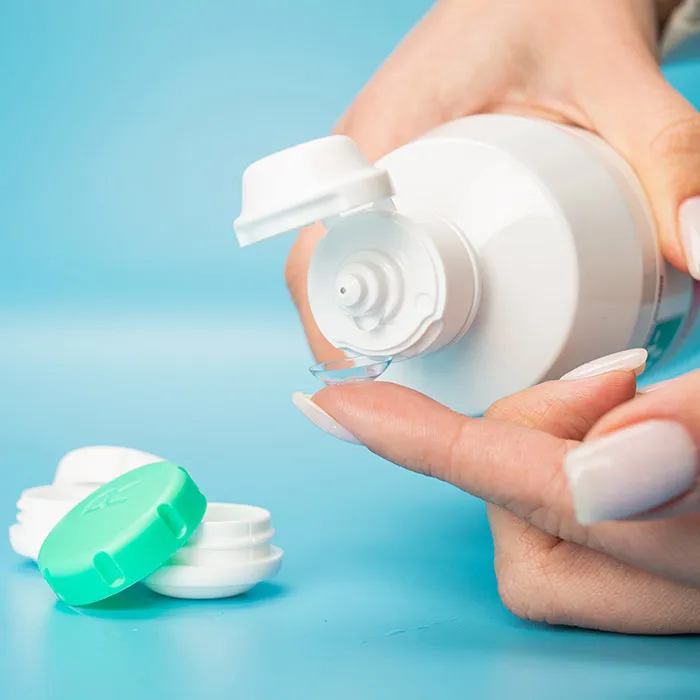
Tap water is safe to drink, but it isn't sterile. Whether it is safe to use on your eyes depends on the situation. In an emergency, it can protect your sight. For contact lenses, it can lead to a serious infection.
In a chemical emergency: use tap water immediately
If a chemical splashes into your eye, flush it with clean tap water right away and keep rinsing for at least 15 minutes. Don't delay to look for saline or an eyewash station. Every second a chemical stays on the eye can increase the damage, so the small infection risk from tap water is far outweighed by the need to dilute and wash the chemical away. After flushing, get medical care promptly.
Our guide to eye emergencies covers the full first-aid steps.
For dust, sand or an eyelash: either can work
For a small particle, blinking and letting tears do the work is often enough. If you need to rinse, sterile saline or an eyewash solution is ideal, but clean tap water is a reasonable option when nothing else is available. Remove contact lenses first.
If the eye remains painful or scratchy after rinsing, or you think the surface may be scratched, see an eye doctor. A scratched cornea is more vulnerable to infection, which is one more reason to prefer sterile solutions when you have them.
With contact lenses: never
Contact lenses and lens cases should never come into contact with tap water. That means:
- Never rinse or store lenses in tap water, bottled water or homemade saline.
- Never rinse your lens case with tap water. Clean it with fresh disinfecting solution and let it air-dry face down.
- Dry your hands thoroughly after washing them, before handling lenses.
- Remove lenses before showering, swimming or using a hot tub, unless your eye doctor has advised otherwise. If you swim in daily disposables, throw them away afterward.
The concern is Acanthamoeba, a microscopic organism found in tap water, pools, lakes and soil. It can cause a rare but severe corneal infection that is difficult to treat and can permanently damage vision. Contact lens wearers face the highest risk because lenses can trap the organism against the eye. The CDC's contact lens guidance recommends keeping water away from lenses and cases entirely.
Never use saliva
Licking a lens to rewet it introduces bacteria from the mouth directly onto the eye. Always use the solution your eye doctor recommended.
Signs of infection
Remove your lenses and contact your eye doctor the same day if you have eye pain, redness, blurry vision, light sensitivity or discharge, or a feeling that something is in your eye that doesn't go away. Bring your lenses and case to the appointment.
If tap water touches your lenses or case, don't wear the lenses until they have been cleaned and disinfected as your eye doctor directs (throw daily disposables away), and replace the case. Learn more about contact lens care and fittings at Eye Q.