
Scleral Lenses in Manhattan & Scarsdale
Scleral lenses are large, rigid contact lenses that rest on the white of the eye and arch over the cornea without touching it. For people with keratoconus, corneas scarred or reshaped by surgery, or severe dry eye, they can give sharp, comfortable vision when glasses and ordinary contacts can’t. Dr. Abraham Zlatin and Dr. Zachary Zlatin fit them at both of our offices, and Dr. Sarah Sutnick also fits them in Manhattan.

What Are Scleral Lenses?
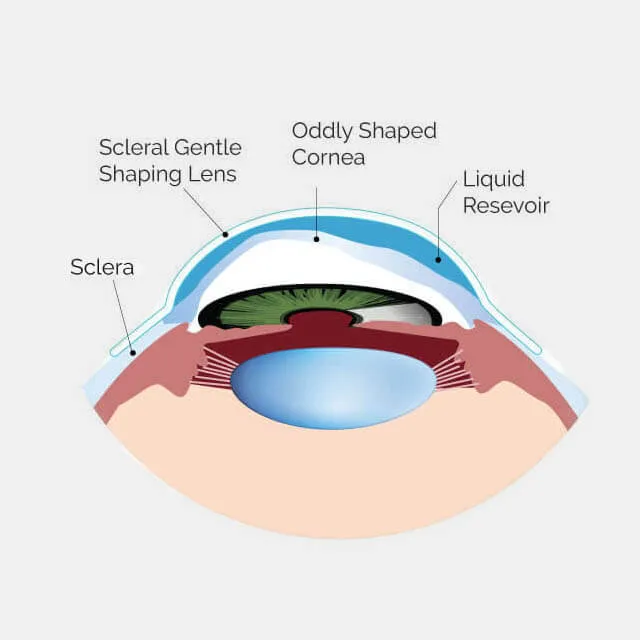
A scleral lens is wider than a soft contact lens and made of a rigid material that lets oxygen through. Before it goes in, its bowl is filled with sterile saline, so once it is on, the cornea sits under a thin layer of fluid. The smooth front of the lens takes over from an irregular cornea, as in keratoconus, and the fluid keeps a dry cornea bathed all day.
Why Scleral Lenses Work for Hard-to-Fit Eyes
How Scleral Lenses Help
Because they don’t touch the cornea, sclerals avoid the rubbing that makes smaller rigid lenses uncomfortable on a cone-shaped or scarred cornea, and their size keeps them centered when you blink, read or play sports. The fluid layer evens out an irregular surface, which is why vision through them is often sharper than with glasses. For dry eye, the same fluid shields the cornea all day.
Who Scleral Lenses Are For
Scleral lenses are most often fitted for:
- Keratoconus, in which the cornea thins and bulges into a cone shape
- Corneas changed by LASIK, PRK, RK or a corneal transplant
- Corneal scarring and some corneal dystrophies
- Severe dry eye, including dry eye from Sjögren’s syndrome or graft-versus-host disease
- Eyes that haven’t tolerated soft or smaller rigid lenses
The Scleral Lens Fitting Process at Eye Q Optometrist
Each pair is made to order from measurements of your eyes, over a few visits:
- An eye health exam to confirm that sclerals suit your eyes and that nothing needs treating first.
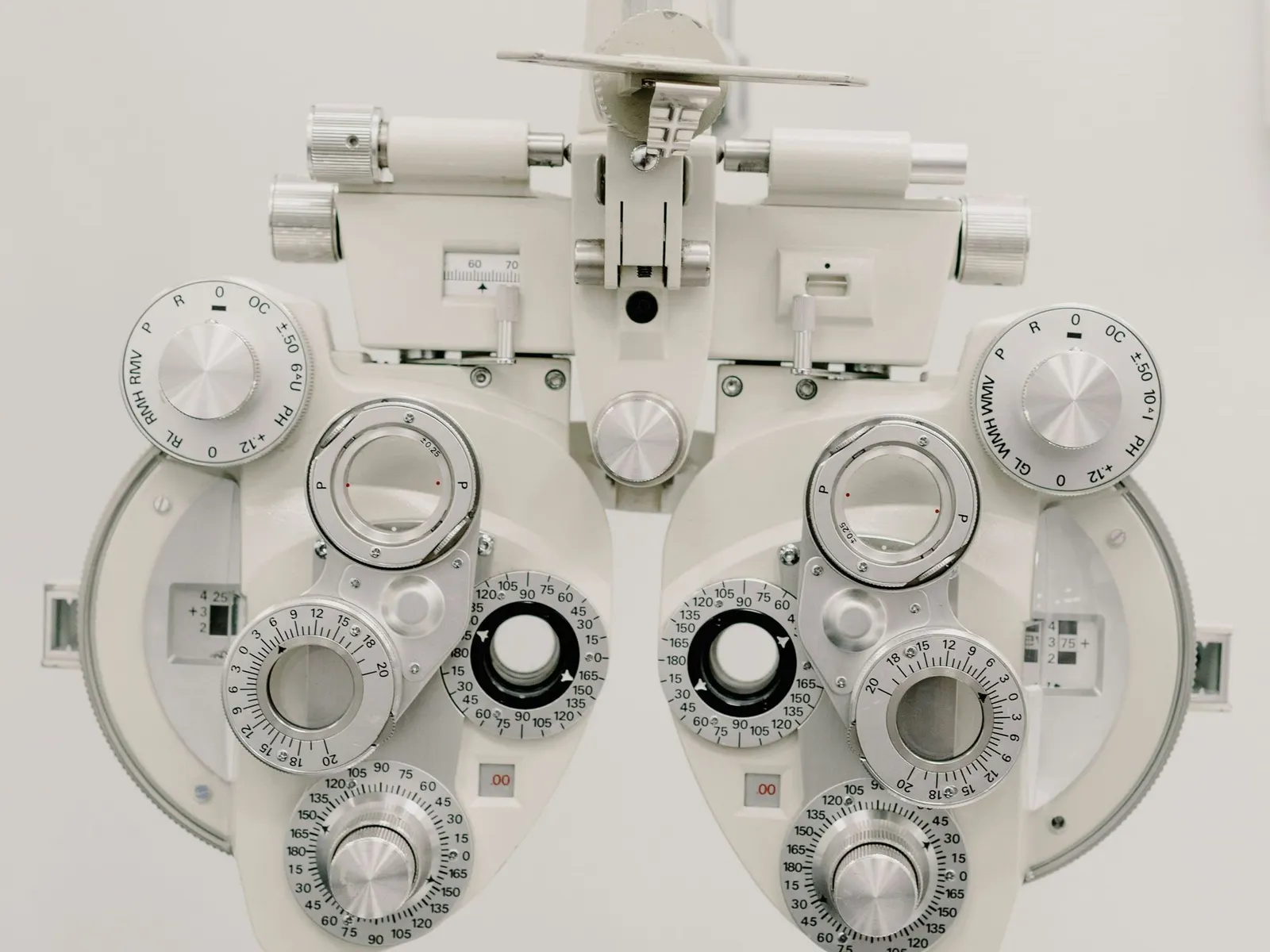
- Measurements of the cornea and the white of the eye with our digital topographer, which give the laboratory the curves for your lenses.
- A fitting visit with the finished lenses, when we check how they sit and how much fluid lies beneath them, and teach you to put them in and take them out. Our guide to caring for scleral lenses covers the daily routine.
- Follow-up visits to fine-tune the fit. Small changes to the lens design in the first months are normal.

Learn More about Scleral Lenses | FAQ
If you have keratoconus, a scarred or surgically changed cornea, or dry eye that makes contacts unbearable, the answers below cover what people usually want to know before a fitting.
How Do Scleral Lenses Help Dry Eye?
Each time the lenses go in, their bowls are filled with preservative-free saline. That fluid stays against the cornea while the lens is worn, protecting the surface from evaporation and from the lids rubbing across it.
For people with severe dry eye, that can mean less pain and redness and steadier, clearer vision through the day.
Are Scleral Lenses Comfortable?
A rigid lens sounds uncomfortable, but a scleral lens rests on the white of the eye, which is much less sensitive than the cornea, and the lid glides over its smooth edge.
Comfort depends on the fit, which is why each lens is designed from measurements of your eye taken by corneal topography and adjusted at follow-up visits. If soft or smaller rigid lenses have let you down before, sclerals are still worth asking about.
Does Insurance Cover Scleral Lenses?
Coverage varies widely. Some plans cover the fitting but not the lenses; others cover more when sclerals are medically necessary, for example for keratoconus or after other lenses have failed. Check with your insurer before your fitting, and our team can help you understand what your plan includes.
Can I wear scleral lenses after corneal cross-linking?
Usually, yes. Corneal cross-linking is a procedure that strengthens the cornea to stop or slow keratoconus from progressing; it doesn’t restore vision that has already been lost. Scleral lenses are often fitted once the cornea has healed, and a cornea that has stopped changing is easier to keep well fitted. Ask us whether cross-linking makes sense for your keratoconus.
Schedule a Scleral Lens Consultation
Book a contact lens exam at our Manhattan or Scarsdale office and tell us you are interested in scleral lenses. Bring the lenses or glasses you wear now and any records from earlier fittings, a cornea specialist or eye surgery.