
If artificial tears no longer help, or you are using them several times a day just to get through work, a dedicated dry eye evaluation is the next step. Dry eye has several possible causes, and treatment works best when it targets the right one.
Bring a symptom note
Dry eye symptoms often change through the day and from week to week, which makes them hard to describe in the exam chair. A few days of notes before your visit gives the doctor a much clearer picture.
| Write down | Why it helps |
|---|---|
| What you feel: burning, grittiness, watering, blur, tired eyes | Different symptoms point to different causes |
| When it happens and how long it lasts | Morning symptoms and end-of-day symptoms have different patterns |
| What makes it worse: screens, reading, wind, heating, contact lenses | Identifies triggers you can change |
| Every drop, gel or ointment you use, and how often | Frequent use or preservatives can affect the eye surface |
| Your medications and supplements | Some medications reduce tear production |
| Treatments you have already tried | Avoids repeating what didn't work |
Bring the products themselves, or photos of their labels, along with your glasses and contact lens details if you wear them.
What the evaluation involves
The visit usually starts with a detailed history and a symptom questionnaire. Eye Q uses the SPEED questionnaire, a short standardized set of questions about how often and how severely you experience dry eye symptoms. It gives a baseline that can be compared at later visits.
The doctor then examines the eyes under magnification, paying close attention to:
- The tear film: how much tear volume there is and how quickly the tear film breaks up after a blink.
- The eyelid margins: whether the oil glands along the lid edges are open and producing healthy oil.
- The eye surface: special dyes can reveal dry or damaged areas on the cornea and conjunctiva.
- Blinking: whether your blinks are frequent and complete.
The National Eye Institute notes that treatment depends on what is causing the dryness, which is why these findings matter more than the symptoms alone.
Treatment options at Eye Q
Your plan may combine several approaches:
- At-home care: eyelid hygiene, warm compresses and the right type of lubricating drops.
- Prescription eye drops: to reduce inflammation or help the eyes make more of their own tears.
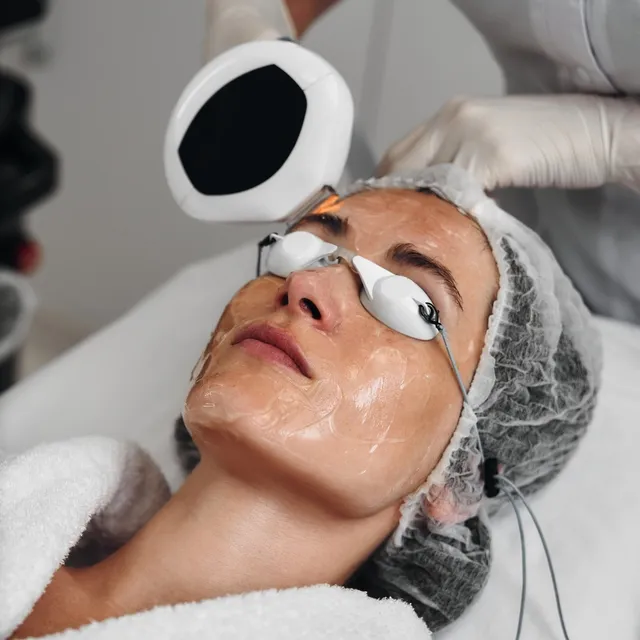
- LUCENT IPL: intense pulsed light treatment applied around the eyes, used to address inflammation and oil gland dysfunction. Learn more about IPL for dry eye.
- Radiofrequency therapy with LUVO Darwin: gentle heat applied to the eyelids to support oil gland function. Learn more about radiofrequency dry eye treatment.
Eye Q's Dry Eye Spa is in the Scarsdale office; ask when you book which treatments are available at each location. Your doctor will explain which treatments suit your findings, how many sessions to expect and how progress will be measured.
Questions to ask at the end
- What is the main cause of my symptoms?
- What should I start, stop or change today?
- How will we know whether treatment is working?
- When should I come back?
When not to wait
Some symptoms need prompt attention rather than a routine dry eye visit: eye pain, a sudden change in vision, a red eye with discharge or significant light sensitivity. New flashes of light, a sudden increase in floaters or a shadow across your vision need urgent care.
See all dry eye treatments at Eye Q.